What Importers Should Request Before Shipping Rechargeable Table Lamps by Air
A procurement checklist for matching battery identity, transport evidence, packing arrangements and current carrier requirements before booking air freight.

Quick answer: identify the battery first, then collect documents for the exact shipment
Before shipping a rechargeable table lamp by air, an importer should establish the battery chemistry, configuration and transport classification for the exact product, then confirm the current packaging, marking, label and documentation instructions with the shipper and airline. If the lamp contains a lithium cell or battery, the buyer should ask the manufacturer or distributor for the applicable UN 38.3 test summary and supporting product identification. The shipment’s classification and packing method depend on details such as whether the battery is installed in equipment, packed with equipment or shipped separately, and on the applicable current rules.
Do not assume that “rechargeable” means lithium-ion, that a battery-capacity figure in mAh is enough to establish watt-hours, or that a generic certificate applies to every lamp. The JBTD-137 public product materials reviewed for this article state 2600 mAh per lamp but do not identify the battery chemistry or provide transport paperwork. Those facts must be confirmed for the ordered configuration before describing it as a lithium-battery shipment.
Introduction: shipping readiness begins before the cartons are packed
A product can pass a sample review and still be delayed at booking if the battery description, test information, packaging or shipper paperwork is incomplete. For importers and distributors, the practical issue is not to memorize dangerous-goods rules. It is to make sure the product data reaches the manufacturer, freight forwarder and carrier early enough for the shipment to be classified and prepared correctly.
Rechargeable lighting can contain a battery installed inside the lamp, a separate spare battery, or different battery types across a product range. These arrangements can fall under different transport entries and packing instructions. The relevant rules can also differ by transport mode and may be supplemented by state or operator variations. A shipping quote or a prior shipment of another model is not enough to establish the current requirements for a new product.
This guide is a procurement checklist, not legal or dangerous-goods advice. It explains what a buyer can request and cross-check when a rechargeable table lamp is being considered for air transport. The final classification, packaging and declaration should be confirmed by the party responsible for the shipment using current official rules and carrier guidance.
Step 1: establish what battery is actually in the product
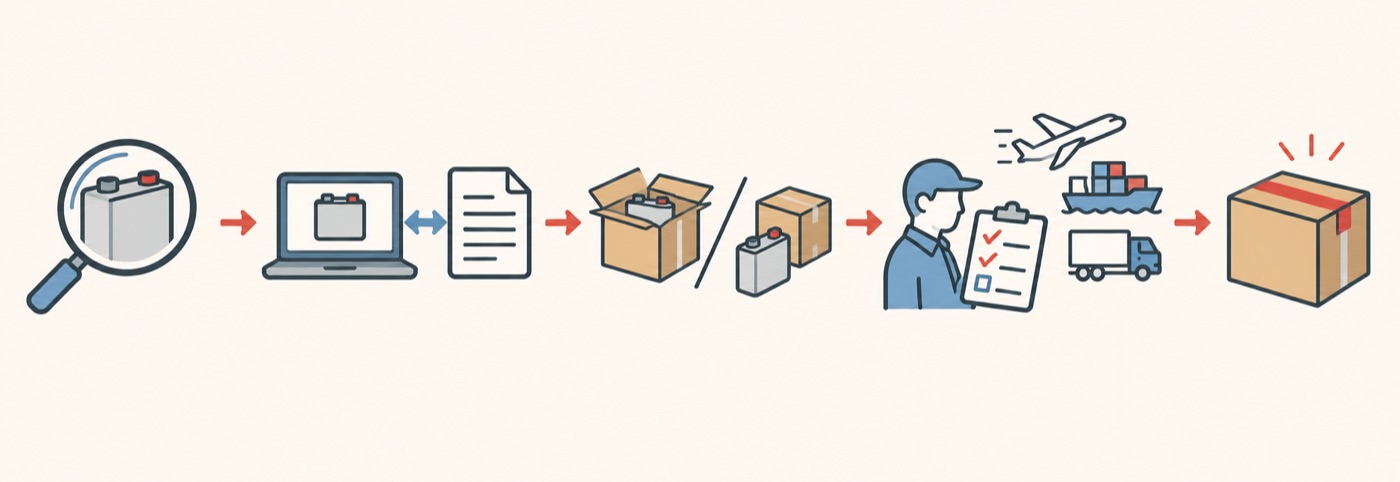
Ask the supplier for a battery specification tied to the exact model and revision. The JBTD-137 page reports 2600 mAh, while chemistry, voltage and watt-hours must be confirmed from the shipment-specific records. At minimum, the buying file should identify the chemistry, cell or battery manufacturer and model where available, rated voltage, capacity, watt-hour rating, number of cells, whether the battery is installed in equipment and whether spare batteries are included. If the product has several variants, request a separate mapping for each one.
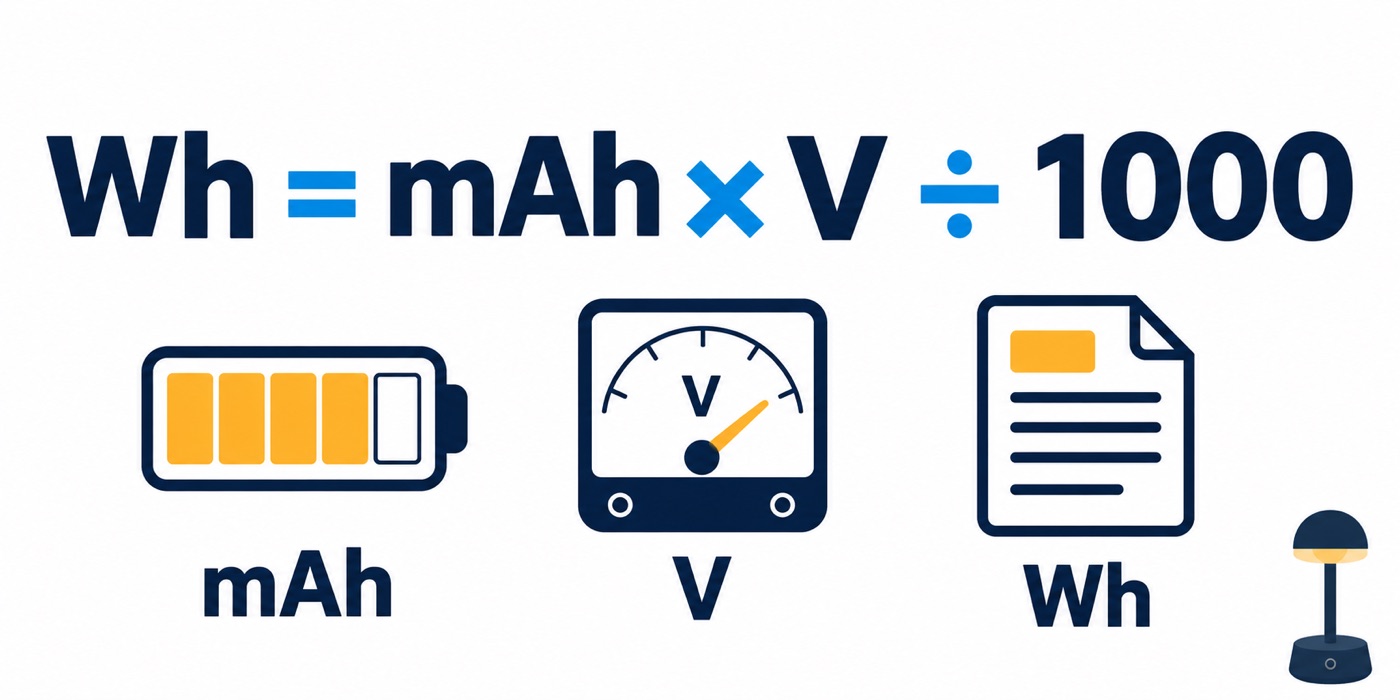
Capacity in milliampere-hours (mAh) alone does not tell a forwarder the watt-hour value. Watt-hours depend on both capacity and voltage. Do not calculate from an assumed nominal voltage or infer a battery configuration from a product photograph. Ask the supplier to provide the rated values from the battery documentation or nameplate and confirm the numbers against the ordered item.
Also verify whether the product uses a lithium-ion, lithium-metal, nickel-metal hydride or another chemistry. The phrase “rechargeable lamp” describes a function, not the battery classification. The product evidence currently available for JBTD-137 states 2600 mAh per lamp, but it does not specify chemistry, voltage or watt-hour rating in the source reviewed here. Therefore, no battery transport classification can responsibly be inferred for that model from the mAh value alone.
Step 2: request a test summary that matches the battery
For lithium cells and batteries, the IATA 2026 Battery Guidance Document explains the current framework and includes the UN 38.3 test summary information. IATA states that manufacturers and subsequent distributors must make available a test summary showing that the relevant cell or battery type has passed the applicable tests in Part III, subsection 38.3 of the UN Manual of Tests and Criteria. The summary identifies the manufacturer, testing laboratory, report reference, test date and description of the tested device, among other details.
The buyer should not treat a report title alone as proof. Compare the test summary’s battery model, manufacturer and description with the component used in the lamp being quoted. If the lamp contains an assembled battery pack, check that the evidence describes the relevant cell or battery type and that any applicable assembled-battery provisions are addressed. A test summary for a different brand, capacity, chemistry or pack is not automatically evidence for the item in your purchase order.
Ask who will provide the summary and how it relates to the finished product. Manufacturers or distributors may make the required summary available through a web link or document, depending on their process. If the supplier says the battery is exempt or a different rule applies, request the specific basis and confirm it with the freight forwarder or qualified dangerous-goods professional.
Step 3: define the shipment configuration
The shipper needs to know how the battery will move, not just what is inside the retail product. Record whether the batteries are:
- Installed in the lamp and shipped as equipment containing batteries.
- Packed alongside lamps as spare batteries.
- Shipped separately from the lamps.
- Included in a mixed carton with other battery-powered goods.
For a lamp with an installed battery, also record the model, battery count per lamp, the number of lamps per carton and whether any spare battery is packed in the same consignment. These details support the forwarder’s classification review and help ensure the invoice, packing list and shipping instructions describe the same goods.
Do not choose a UN number, packing instruction, label or dangerous-goods declaration solely from a supplier’s old document or a competitor’s example. The applicable entry can depend on battery chemistry, watt-hours, quantity, whether batteries are contained in or packed with equipment, state of charge and transport mode. The airline may impose operator-specific restrictions. A qualified shipper or dangerous-goods specialist should review the exact configuration against the current edition of the applicable rules.
Step 4: review packaging, marks and labels with the responsible shipper
Packaging requirements are not interchangeable across every battery shipment. The current IATA battery guidance points shippers to the relevant packing instructions and reminds them to protect terminals from short circuits, use the required packaging, apply required marks and labels, and complete required documentation. Exact requirements depend on the classification and packing instruction selected for the shipment.
For buyer-side preparation, request a packaging plan or written confirmation identifying who will provide the inner and outer packaging, battery protection, marks, labels and any dangerous-goods paperwork. Confirm that the final carton design corresponds to the approved lamp and battery count. If the packing method changes after the shipment documents are prepared, ask the forwarder whether the classification or paperwork needs to be revised.
The buyer can also inspect the commercial packing list and invoice for consistency: model numbers, quantities, battery details where requested, carton count, gross/net weights and consignee information should match the actual shipment. These commercial documents do not replace dangerous-goods documentation, but inconsistencies can prompt questions or delay a booking.
Step 5: confirm the transport mode and current rules
Air, sea, road and courier shipments can use different rules and operational checks. This article focuses on air shipment because airline acceptance is often a key issue for rechargeable products. IATA’s 2026 guidance notes that state and operator variations may impose more restrictive conditions; it advises shippers to contact the airline before offering a lithium battery shipment for transport.
Ask the freight forwarder which current rule set applies, who is the shipper of record, who will sign or submit any required declaration, and whether the carrier requires additional documents or pre-approval. Confirm the planned route and whether the goods will travel on passenger or cargo aircraft if that distinction affects the selected packing instruction. Never assume a previous booking makes a new shipment acceptable: the battery, package, route, carrier and applicable rule edition may differ.
The UNECE Manual of Tests and Criteria is the source for the UN test framework. IATA publishes practical guidance for air transport and updates its manuals. A buyer should check current documents at the time of booking rather than relying on a blog post as an up-to-date classification source.
Step 6: build a model-specific document pack
For each lamp model and battery variant, create a controlled folder with the supplier’s current documents. A practical request list includes:
- Product and battery identification: model and revision, battery chemistry, cell/battery manufacturer and identifier where available, rated voltage, capacity and watt-hour rating.
- UN 38.3 test summary, if applicable: a summary matching the relevant battery type, with report reference and test lab details.
- Battery safety and technical documents: request the datasheet or other documents required by the carrier or importer. Do not assume that an SDS, a test summary and a transport declaration are substitutes for one another.
- Classification and packing information: written confirmation from the shipper or forwarder of the applicable transport entry, packing instruction and package requirements for the planned shipment.
- Package and label artwork: the final mark/label requirements and the party responsible for applying them.
- Dangerous-goods paperwork: the declaration or other transport documents required for the selected shipment, completed by the responsible trained shipper when applicable.
- Commercial documents: invoice, packing list, carton details, origin information and shipping instructions that match the actual goods.
- Carrier acceptance: written confirmation of any operator-specific requirements or route restrictions that apply.
This list is a request framework, not a statement that every shipment requires every document. The forwarder or dangerous-goods professional should identify what applies to the actual battery and route. Store document revision dates and the product configuration they cover. If the battery or lamp changes, re-check the evidence before reusing the pack.
How to check that a test summary and product belong together
Use a short cross-check instead of looking only for a familiar standard number. Confirm that the report names the battery manufacturer and model relevant to the order. Compare the summary’s chemistry and physical description with the supplier’s battery data. Check the test laboratory and report reference, then ask the supplier to clarify any difference in model suffix, cell count, pack arrangement or capacity.
A family document can sometimes cover more than one related model, but the scope needs to be clear. Ask the supplier to identify exactly which variants are included and whether the finished assembled pack meets the relevant provisions. Do not assume that a report for a component automatically covers a separately configured battery pack or a different assembled product.
If the documentation uses a model code that does not appear on the commercial quotation, request a written mapping. This is especially important for private-label products where the retail model name may differ from the battery manufacturer’s identifier. The mapping should be specific enough that a shipping reviewer can connect the document to the units in the carton.
A practical pre-shipment checklist
Before approving the booking, the buyer or responsible shipper can verify:
- The product model and battery configuration match the purchase order.
- Chemistry, voltage, capacity and watt-hour rating come from a supplier document, not an estimate.
- Batteries are identified as installed, packed with equipment or shipped separately.
- The UN 38.3 test summary, where applicable, matches the battery type in the shipment.
- The forwarder has confirmed the current transport classification and packing instruction.
- Packaging, short-circuit protection, marks and labels are assigned to a named party.
- The airline or operator has been checked for route-specific variations or restrictions.
- Dangerous-goods declarations, when required, are completed by the responsible party.
- Invoice, packing list, package count and battery information are consistent.
- Document revisions and product configuration are stored in the order file.
Do not use this checklist to self-classify a shipment. It helps buyers ensure that a qualified party has enough accurate information to do the classification and booking review.
FAQs
Does every rechargeable table lamp use a lithium battery?
No. “Rechargeable” does not identify chemistry. Ask for the battery specification for the exact model and revision. The JBTD-137 materials reviewed here list 2600 mAh capacity but do not specify chemistry, voltage or watt-hours.
What is a UN 38.3 test summary?
It is a summary of test information for a lithium cell or battery type under Part III, subsection 38.3 of the UN Manual of Tests and Criteria. IATA’s 2026 guidance describes the information included and the requirement for manufacturers and subsequent distributors to make a summary available for applicable lithium batteries.
Is a UN 38.3 test report the same as a test summary?
They are related but not interchangeable in every document workflow. IATA refers to the test summary requirement and provides an example format. Ask the supplier and forwarder which document is required and verify that it covers the battery in the ordered product.
Can the mAh rating tell me whether a lamp can ship by air?
No. mAh alone does not establish watt-hours or transport classification. The rated voltage, chemistry, battery configuration, quantity and packaging arrangement may also matter. Request the battery’s documented values and have the responsible shipper classify it.
Should the importer or supplier prepare the dangerous-goods declaration?
Responsibility depends on the transaction, shipment arrangement and applicable rules. The buyer should identify the shipper of record and agree who prepares and signs required paperwork. A trained, responsible party should complete declarations where required.
Do I need a UN 38.3 summary for a battery installed in a lamp?
IATA’s guidance says the test summary requirement applies to lithium cells and batteries including those contained in equipment, subject to stated exceptions such as equipment containing only lithium button cells. Confirm the exact product and current rule with the responsible shipper.
Can my forwarder use the same documents for every product in a range?
Only if the document scope clearly covers the battery types and configurations in those products and the forwarder confirms it is acceptable for the shipment. Different model suffixes, pack designs or battery suppliers may require separate mapping or evidence.
Who should confirm current air-shipping requirements?
The shipper and freight forwarder should review the current IATA Dangerous Goods Regulations, the applicable national rules and airline/operator variations for the exact route. Use a qualified dangerous-goods professional when classification or packaging is unclear.
Conclusion: make document matching part of supplier selection
A buyer can reduce avoidable shipping delays by requesting battery identity and transport evidence before production and booking. Confirm the actual chemistry and configuration, match any UN 38.3 test summary to the battery, and let the responsible shipper verify current classification, packing, labels and documents for the chosen route.
For JBTD-137, the public model information reviewed here confirms a 2600 mAh battery capacity but does not establish chemistry or watt-hours. The correct next step is to request those details and the applicable shipping documents for the exact order, then have the forwarder confirm transport requirements. Good documentation starts with precise product identity and a clear handoff between buyer, manufacturer and logistics provider.
Send your requirements to Jbian.
Contact Jbian with your product model, destination and planned transport mode. Request the battery data available for the quoted configuration and agree which documents will be supplied by the manufacturer and logistics provider before shipment booking.